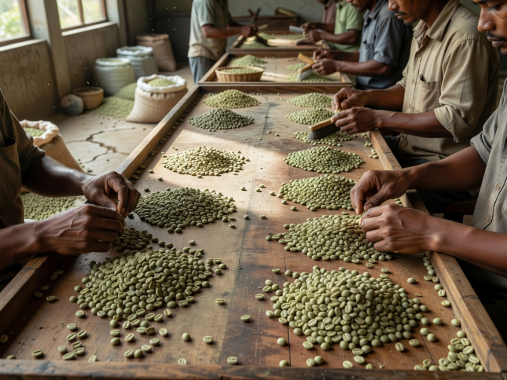
The Micro-Lot Fermentation Challenge
Anaerobic fermentation has transformed specialty coffee over the past decade. By sealing coffee cherries in oxygen-deprived tanks for anywhere from 72 to 200 hours, producers extract complex floral and fruity flavor profiles. However, this extended enzymatic breakdown drastically shifts the physical properties of the parchment and green coffee seed.
1. Density Shift Analysis
During prolonged anaerobic contact, sugars inside the mucilage break down into lactic and acetic acids. These compounds penetrate the cellular matrix of the seed, slightly softening the cell walls. Standard gravity table sorters calibrated for traditional fully-washed coffees frequently reject these high-value beans as "low density" defective seeds.
2. Recalibrating Optical Sorting Cameras
Because anaerobic beans exhibit a distinct brownish-amber or silver-skin discoloration, legacy optical sorters misidentify perfectly sound anaerobic seeds as defective fermented beans. To resolve this issue, sorting facilities must employ multispectral SWIR (Short-Wave Infrared) illumination.
Key Calibration Parameters for Anaerobic Lots:
- Red Channel Offset: Shift color threshold by +12% toward warm-orange spectra.
- Moisture Absorbance Gate: Utilize 1450nm SWIR laser sensors to evaluate moisture uniformity rather than surface color alone.
- Pneumatic Air Pressure Reduction: Reduce ejector pulse pressure to 0.45 MPa to prevent cracking delicate anaerobic cellular structures during rejection sweeps.
Conclusion: Protecting Producer Value
Micro-lots require customized grading rules. By adapting optical sorter algorithms to the unique physical traits of experimental fermentations, dry mills protect high-scoring coffee from unintended waste, maximizing profit for coffee farmers worldwide.